Written by Deanna Conners and published on https://earthsky.org/.
Deciduous trees shed their leaves as an active process that evolved to conserve resources and protect the tree from being blown over in the windier winter months. The process is controlled by the plant hormone auxin. As light levels and temperatures drop, the flow of auxin to the leaves slows and levels of another hormone, ethene, rise. This signals the cells at the base of the leaf to weaken their cell walls, at the same time as other cells expand to break the connections between the weakened cells. The result is like tearing perforated paper, and the leaf drops to the ground.
Why Trees Shed Their Leaves
In temperate forests across the Northern Hemisphere, trees shed their leaves during autumn as cold weather approaches. In tropical and subtropical forests, trees shed their leaves at the onset of the dry season. Many types of trees shed their leaves as a strategy to survive harsh weather conditions. Trees that lose all of their leaves for part of the year are known as deciduous trees. Those that don’t are called evergreen trees.
Common deciduous trees in the Northern Hemisphere include several species of ash, aspen, beech, birch, cherry, elm, hickory, hornbeam, maple, oak, poplar and willow. In tropical and subtropical regions, deciduous trees include several species of acacia, baobab, roble, ceiba, chaca and guanacaste.
Most deciduous trees have broad leaves that are susceptible to being damaged during cold or dry weather. In contrast, most evergreen trees either live in warm, wet climates or they have weather-resistant needles for leaves. However, there are exceptions in nature, such as tamarack trees that shed their needles every autumn and live oaks that retain their broad leaves for the entire year even in relatively cool climates.
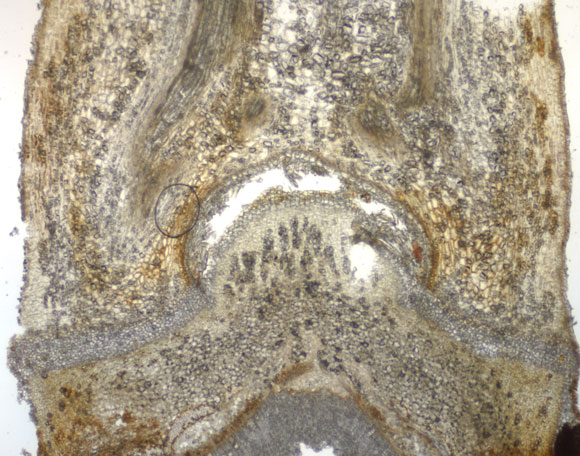
Shedding leaves helps trees to conserve water and energy. As unfavorable weather approaches, hormones in the trees trigger the process of abscission whereby the leaves are actively cut-off of the tree by specialized cells. The word abscission shares the same Latin root word as that in scissors, scindere, which means “to cut.” At the start of the abscission process, trees reabsorb valuable nutrients from their leaves and store them for later use in their roots. Chlorophyll, the pigment that gives leaves their green color, is one of the first molecules to be broken down for its nutrients. This is one of the reasons why trees turn red, orange, and gold colors during the fall. At the end of the abscission process, when the leaves have been shed, a protective layer of cells grows over the exposed area.
The shedding of leaves may also help trees to pollinate come springtime. Without leaves to get in the way, wind-blown pollen can travel longer distances and reach more trees.
Original post here https://ift.tt/2m2iYu2.
from Cairns Tree Lopping Pros https://ift.tt/3nH0HOW
via IFTTT

No comments:
Post a Comment