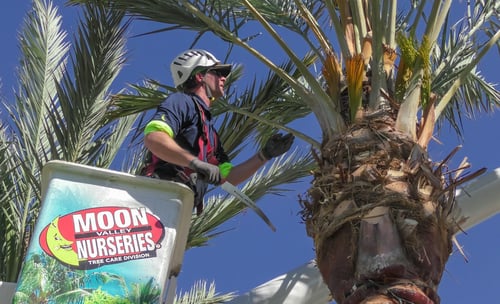
All of our tree experts are certified professionals and our working standards are the highest in the industry.
If you have an ageing, damaged, or an ill tree, it becomes necessary for you to remove that tree at the very first hour. Tree removal could also be done for other reasons like when it causes an obstruction to another thing or maybe for aesthetic reason.
Factors such as frost and decay can cause you to have a newly fallen tree to clean up. You may be wondering, therefore, where to dispose of fallen trees. There are a variety of options to choose from, and you really just need to pick the one that works best in your area. First, however, here are some things to consider.
The Best Way to Get Rid of a Fallen Tree
Trees can fall suddenly for many reasons. Thunderstorms, tornadoes and hurricanes, even earthquake activity or wildfire, may contribute to toppling them. Sometimes they merely get old and fall apart naturally. Establishing the reason a tree falls is important, because most municipalities offer some removal aid in cases of natural or widespread disaster, while a rotten tree on your own property will likely be your problem alone. Start by determining where the responsibility for the tree lies before deciding what to do about the tree.
Determine Responsibility
If you live in the city or suburbs, you see trees along streets or in parks and public areas. Those trees are almost always maintained by the city or in some instances by county or state agencies. If a tree from one of those areas falls on your property, call your local officials to identify the responsible agency, then arrange with them for getting rid of it. If you are uncertain whether a tree is on your property, a public property or your neighbor’s property, consult your title survey or plat map. If the tree is definitely yours, you must remove it yourself or consider paying someone to do the job for you.
Firewood
Having a tree on the ground in your yard may seem like a disaster, but looked at in a positive light, it can be a boon. If you heat your home with wood or own a fireplace, you know that buying firewood is expensive. Think of your fallen tree as almost-free firewood — you still have to pay for a chain saw and fuel to power it. If you don’t need firewood, you can still save some of it for the backyard fire pit and sell the rest to someone who does use it. Better yet, save the hassle and expense of cutting it up yourself by offering it free for someone else to cut and haul. Do consider potential accidents, however. If your insurance policy doesn’t cover such things, make sure the person who does the cutting is clearly covered by his or her own policy or bond.
Landscaping
Depending upon your landscaping design, a large fallen tree — especially its trunk and bigger limbs — could be an asset. A section of the trunk situated in a woodland setting makes a wonderful natural bench, or you can cut short logs about 2 feet long to use as rustic stools. Another somewhat taller section makes a sturdy base for a garden table — all you need is a salvaged tabletop. Put branches in a brush pile to attract wildlife to the garden, or use appealingly shaped branches as accents for a rustic fence or an informal wildflower bed. Nature loves an old rotting log, so even if you don’t want it for your own use, consider letting it decay in an out-of-the-way corner as a home for insects, voles or chipmunks.
Lumber
Some trees are more valuable than others. If your tree is old, rotten or of poor quality, use it for firewood or brush piles. But if you are lucky enough to have a mature walnut, cherry, redwood or other furniture-wood tree in reasonably good shape, think about hauling workable sections to a mill for cutting it into lumber. Alternatively, rent a portable lumber mill, or hire someone to operate one for you, and mill the wood onsite. Season your lumber, and set it aside for future wood-working projects. To learn which wood has lumber value, contact your state forestry or conservation department or contact the U.S. Forestry Service and ask them to direct you to local forestry information sources.
Safety
Never operate a chain saw or other power equipment, such as a chipper-shredder, without a thorough knowledge of the operation of these dangerous tools. Always wear safety gear such as steel-toed boots, chainsaw chaps and gloves, and safety goggles, helmet and hearing protection. If you do not understand how to properly use a chain saw, don’t. Hire a professional.
Original post here https://ift.tt/31R5cND.
from Cairns Tree Lopping Pros https://ift.tt/2JeXoia
via IFTTT
Everyone loves the look of a majestic tree in their front yard. They not only provide shade and beauty, but they also supply us with much-needed oxygen. But when they’re planted too close to the foundation, they can cause foundation problems.Sometimes, tree root damage can mean thousands of dollars in repair costs to buildings, plumbing systems, and pavements.
Can Tree Roots Damage Your House Foundation?
Trees growing near a home are often a source of worry to a homeowner, mainly because of the roots. And while tree roots can do damage to a home’s foundation, it’s probably not for the reason many believe. Those roots, in fact, won’t be able to push through the foundation, buckling it in spots. Rather, roots can rob the soil near the foundation of crucial moisture. Soil subsidence and loss of key foundation support then develops.
Foundations
House foundations depend on the surrounding soil for support to keep from bowing outward, for instance. Ideally, the soil was dense to begin with and then compacted when the foundation was laid, but it may not have been. Some soils have a lot of sand, which can mean they need moisture to maintain their solidity. When they’re deprived of that moisture, they can start settling, leaving the foundation in that area with less support.
Roots
The roots of a tree just aren’t able to push their way through foundation walls and are often easily turned away by simple barriers. However, they do remove a lot of moisture from adjacent soil. Also, as they grow larger over the years they can further loosen soil, heaving some of it out of their way. As a result, a pressure imbalance develops between the soil and the foundation, leading to outward bowing.
Location
In many cases, tree root systems that have managed to create soil settling or subsidence are within 16 feet or so of a home. Remember that tree roots grow outward to search for water. If you keep any trees, bushes and shrubs near your home properly watered, there’s little chance of them creating problems. Usually, those within 20 to 30 feet of your house will benefit the most from regular watering.
Warning
House foundations act as effective root barriers. However, roots will continue to search for water. And they may go after your underground water pipes if there are any leaks. Also, certain species of tree are more thirsty than others, especially if they’re larger types. These include oaks, which have extensive root systems. If you plant a tree near your house, try for at least slightly farther away than half the width of its maximum branch spread at maturity.
Original post here https://ift.tt/3lEKiZB
from Cairns Tree Lopping Pros https://ift.tt/35IoGVB
via IFTTT
There’s more to tree care than you probably think. At Pro Tree Service in Chicago, we want to help you keep your trees healthy and beautiful for years to come. It starts with knowing some general dos and don’ts of tree care. Proper pruning is essential for the health and beauty of landscape trees, and improper pruning can damage or ruin the appearance of a tree for years. Given that trees are usually the most expensive items planted on a property, it just makes sense to protect your investment by learning some basic pruning techniques, or by making sure to hire a properly qualified professional.
Important Do’s & Don’ts Of Tree Care
Do: Prune your trees
Trees do need some pruning every once in a while, but when and how often is always a hot debate. One thing that is certain, is fall is a very bad time to prune. It stimulates growth right before the winter hits. It is also a time where fungi and diseases can spread.
Don’t: Prune your trees too often
You should never prune your trees every season of the year. Early spring is the ideal time to do the majority of your pruning. This way, you are stimulating growth at an optimal time. Always avoid big pruning cuts. This can potentially be too big of an injury for your tree which can leave them vulnerable.
Do: Look for pests and tree diseases
The more you know about your trees, the better! Keep an eye out for any pests. See if there have been any outbreaks in your area. Know the signs of a sick tree. This can save you some money and, more importantly, your tree’s life.
Don’t: Do any cleanup after storm damage
First, make sure the scene is safe. Then, you should contact your insurance agency and take pictures of fallen trees and damage. Going outside and trying to clean up the mess could ruin your insurance claim.
Do: Make sure your tree isn’t getting too close to power lines
Having a tree close to a power line is a hazard. If a nasty storm hits, you could easily lose power. It’s better safe than sorry. Trim or remove the tree if it is getting close to the power lines. If it is by the street power lines, contact your city. They may indeed trim it away from the power lines free of charge.
Don’t: Plant trees too close to each other
A tree’s root system is huge. Placing a tree next to something solid or another tree could disrupt healthy root growth. Without healthy root growth, trees can easily topple over. Moreover, without healthy root growth, trees might not reach their full potential. A rule of thumb, the roots could be two to four times the diameter of the crown.
Do: Water Your Trees
Just like your lawn needs water, trees need some water too after a couple of hot summer days. Water all around the base of your tree.
Don’t: Overwater your trees
At the same time, you don’t want to overwater them either. This can put the tree in danger of root rot or pest invasion.
Do: Use mulch around trees
Mulch can be your tree’s friend if used properly. A layer of mulch can keep the soil moist around the tree’s roots.
Don’t: Use too much mulch
Though this sounds like a tongue twister, it is a common tree care problem. If you add too thick of a mulch layer, you create a breeding ground for pests and rot root (sort of like the overwatering issue mentioned above).
Don’t: Try to remove a large tree by yourself
Large trees are a danger to you and your property. Let a certified arborist take care of this task. Thousands of people are hurt each year by chainsaw accidents, fallen trees, and fallen electricity lines.
Do: Call a tree service for help
This isn’t meant to sound like a pitch. Tree services exist for a reason! If you have a large tree that needs to be removed or a tree that looks sick, give a tree company a call. They will often come out to your home and offer advice and a free bid. Tree service companies can offer you better advice than a Google search.
Do: Buy trees that are native to your area
No one would plant a palm tree in their yard in Minnesota, would they? If they did, it most likely wouldn’t live long. Choosing a beautiful tree that is native to the area is best for your tree and your wallet. Minnesota has 52 native tree species to choose from.
Original post here https://ift.tt/3kE7mY2.
from Cairns Tree Lopping Pros https://ift.tt/3ozfOub
via IFTTT
As August barrels down upon us, Austin begins to dry out in the oven of Texas summer. Lack of rainfall was not an issue earlier in the year, trees and lawns have been looking great so far compared to previous years. It may be though that the rain has passed us by for a bit and we’ll need to keep an eye out for water stress in our trees and shrubs. n residents are likely to have sprinkler systems throughout their yard, and it is often the case that we depend on such irrigation systems to maintain not just our grass, but our trees as well.
Trees & Drought Stress
A dry summer is not only stressful for people, pets and livestock, but for our trees and other vegetation. Trees require a lot of water to meet their functional needs and long-term shortages can influence growth and survival.
Drought Stress Symptoms
Trees signal their water deficit through a number of symptoms. The most common changes in appearance are lighter green to yellow-green foliage, leaf scorch around the margins, wilting leaves and dropping them prematurely. These stressed trees will also often have stunted shoots and may produce more seeds than typically seen for a tree. Conifers will often produce an abundance of cones the second year of a drought. Trees that are stressed by drought are also more susceptible to insect borers and canker diseases. Bronze birch borer attacks on birch are more common during drought years. Two-lined chestnut borer is often associated with declining oaks during drought.
Understanding Water Needs
Just how much water does an established tree need during our hot summers? This depends on a number of variables but two key ones are the size and species of tree. Almost all the water absorbed by a tree on a summer day is lost out of the leaves through transpiration. This process moves water from the roots, up through the trunk and branches and releases it as water vapor from small holes in the foliage. Only one or two percent of the water is used for meeting the needs of the tree for photosynthesis and other functions. While water is “lost” through transpiration that does not mean it was wasted. The water vapor from the leaf helps cool the foliage surface, often as much as 10° to 15° F. The transpiration stream is also the mechanism that pulls water through the tree without the tree having to do any work. Each leaf may be transpiring about one-tenth of an ounce of water per day during the summer. A mature elm tree may have more than 150,000 leaves so the tree may transpire more than 100 gallons of water in a single hot summer day!
There are also differences among the many tree species in the amount of water they transpire. Conifers with their thicker, waxy needles lose less moisture than a broadleaf tree such as an oak or maple with their wide, thin foliage. However, the differences among tree species is not as important as its size. The larger the tree, the more water it requires.
Watering Considerations
Trees required water during the summer and the general rule-of-thumb is they need about one inch of water per week. Unfortunately, rains are not that dependable in South Dakota and we can get three inches one day and nothing for the next two months.
Ideally this amount of water is provided to the tree every week, rather than double or triple the amount every two or three weeks. The water should also be applied slowly so that it soaks into the ground rather than runs off. The area to be watered should be from the trunk to a distance out equal to about half the height. While tree roots often extend as far out as the tree is tall, the majority of roots are closer to the trunk.
The water chart in Table 1 will provide the equivalent of about one inch of water. To check to see if you are adding this amount, place an empty coffee can within the sprinkler zone and run the sprinkler until you have about 1 inch of water in the container. Also check to be sure the water is infiltrating the upper foot of the soil as this is the zone for the majority of absorbing roots. After the first watering or two, dig a narrow hole by hand to a foot deep and check to be sure the soil is moist. If not, additional water may need to be applied or the water applied at a slower rate.
Original post here https://ift.tt/3mw2btY.
from Cairns Tree Lopping Pros https://ift.tt/35KXJ3s
via IFTTT
On the first day of fall, it’s only appropriate that we write about spectacular autumn foliage. More specifically, we thought it would be good to discuss why leaves change color this time of year. Let’s revisit your middle school science class for a moment. According to ScienceDaily, chlorophyll is a green pigment found in plants, algae, and cyanobacteria. You might remember that chlorophyll plays an essential role in the process of photosynthesis, which allows plants to absorb energy from light.
So how does chlorophyll factor into the changing of leaves? Well, as summer comes to a close and temperatures start to become more fall-like, the chlorophyll in the leaves begins to break down. This is when we see the various color pigments, including red, orange, and yellow. Interestingly, the colors are most vibrant when the end of summer is dry, and the beginning of autumn consists of bright sunny days and cool nights.
What Causes Leaves To Change Color?
Ever wonder why leaves change color each fall?
We checked in with a real “fall guy,” Appalachian State University Biology professor, Howard Neufeld, who has been studying fall color for much of his career, to get the answer. His scientific interest in what occurs inside a leaf has naturally progressed to what shows outside, and when. Neufeld‘s research and sociability have made him a go-to guy for fall color science and forecasting. So what does he say about why leaves change color?
What Signals A Leaf To Change Color?
The vivid, often simple colors on the outside are the products of the complex chemistry of growth inside a leaf. Take the yellows and oranges, for example—the dominant colors of aspen, ash, birch, beech, hickories, maples, some oaks, tulip poplar, and sassafras—generally, these colors come from compounds called carotenoids (also responsible for the color of carrots) which are present in the leaf during the growing season.
The green chlorophyll, the workhorse of photosynthesis, dominates and covers up those carotenoids in summer. As the days grow shorter and the temperatures cool, chlorophyll degrades and goes from green to colorless, allowing the oranges and the yellows to show up. These colors are present in the leaf during its growing season.
What About The Reds – How Does That Happen?
Those gorgeous scarlet, crimson, and ruby hues of the red maples, black gums, dogwoods, sourwood, and oaks are what makes fall the most breathtaking. “Red pigments are not present in the leaf during summer,” Neufeld says. “Trees that turn red actually produce this pigment, called anthocyanin, in the autumn.” However, though we might like to think so, plants don’t make this red pigment for our appreciation. These pigments play a key role in readying the tree for the next spring. Researchers discovered that anthocyanins act as a sunscreen, protecting leaves (especially evergreen ones) from bright seasonal light when it is cold outside. Other researchers have discovered that the sunscreening effect protects leaves from too much light, which can interfere with late-season transport of nutrients from the leaf back to the twigs, something trees do as a conservation mechanism.
Still, other scientists believe the red color serves to ward off insect pests. A healthy, strong plant has lots of anthocyanins; certain insects laying eggs in the fall may seek other, weaker host plants for their offspring.
While anthocyanins may ward off insects, there is no doubt that they are magnets for “leaf peepers” for fall color tourism. A little bit of red goes a long way—and more is even better.
What Conditions Make For Good Fall Color?
Neufeld offers a “recipe” for good autumn color: “Starting in August, days must be sunny and the nights steadily cooling. This allows the trees to manufacture sugars, and sugars stimulate the leaves to make anthocyanins. The cold helps keep the sugars in the leaves producing anthocyanins.”
The calendar needs an August footnote to remind us to watch the weather during that month for fall color later. Too many clouds, too much rain, or too much heat in the eighth month can make for a duller fall. September, though generally cooler, follows suit. “Drought is the other enemy of a good fall.” Neufeld adds, “The trees have to be in a healthy state —not water-stressed—heading into the season.”
Neufeld does his best to provide such guidance with continuous observation. The good news for would-be travelers is that “peak color” is a peculiarly local condition depending on the local weather, the mix of trees, the elevation above sea level, and the distance from the equator.
When Do Leaves Change?
Fall color starts earlier at higher altitudes and in northern regions than it does in lower elevations or farther south. Apply these rules to a map of North America and it is possible to zigzag north to south, higher to a lower altitude to extend fall color viewing for nearly six weeks, maybe longer. Fall color is about location, location, location—and good timing!
What About Trees Down South—Do They Change Color?
Where palm trees, live oaks, and cactus grow, there is little to “rake home about” in autumn. The Gulf Coast and the arid southwest are mostly fall-colorless.
What Can I Plant For Fall Color?
Want a burst of color each fall? Consider planting these small trees with reliable fall color:
Red – Flowering Dogwood Yellow – Redbud Orange/Crimsom – Japanese Maple
Excellent fall color featured in large trees includes October Glory red maple (uniformly red), sugar maple (orange), and katsura (yellow).
Original post here https://ift.tt/34AmLD3.
from Cairns Tree Lopping Pros https://ift.tt/3e39Dtz
via IFTTT
Summer storms in northern Virginia are a common and dangerous occurrence. Although we all love the warmth and sunshine of summer, it also brings with it torrential downpours, violent thunderstorms, occasional tornadoes and high winds – we’ve even been hit with hurricanes – all of which put trees and property at risk.We normally think about summer storm damage to trees being caused by strong winds. However, much of the worst damage is usually a result of heavy rain.The torrential downpours we often see with summer thunderstorms saturate the ground with rainwater. As a result, trees are more easily toppled by winds because the tree roots cannot hold the tree firmly in wet soil. Most of the downed trees you see after a storm are due to roots being pulled out of drenched soil.
Tips to Protect a Young Tree from Wind Damage
While all trees can be damaged by extreme winds, young ones are especially susceptible. Even during the summer and spring months, when frost is no longer an issue, these young, not-yet-stable trees may be seriously damaged by strong gusts of wind. In fact, just a single storm may topple over a young tree, or case serious damage and stress.
Even though you can’t control Mother Nature, there are a few steps that you can take to help protect your trees from any type of wind damage.
Stake the Trees
It is extremely smart to install support stakes when you are planting a brand new tree. These stakes can be made out of wood or metal, as both materials are effective. Also, use strong, yet soft, fabric to actually tie your tree to the stake. Leave a little slack so the tree can move naturally in normal wind, but not so slack that they can move too far in a single direction.
The natural sway action will help the tree in establishing a strong and deep root system, a strong and stable trunk and branches that can withstand natural weather and wind. While two stakes are sufficient in most cases, having three is even better.
Select the Right Location to Plant the Tree
While this may not always be an option, if you are planting a sapling, you need to consider the area carefully. Try to find a location that has natural protection from the wind. If you know the wind usually comes from the east to the west, for example, then try to move the tree to the west side of your home. When you do this, the house is going to serve as a windbreak and stop the gusts of wind all while protecting the tree from serious damage.
Use a Cover
You can also use some type of cover to protect the tree from wind damage. There are some people who assume that a tree cover is only effective at preventing frost; however, this isn’t necessarily the case. In fact, a cover can be used to help protect a tree from the wind, pests and other types of damage.
When you use a cover, make sure to place it over the trees top and then tape the bottom around the trunk. After the winds are over, you need to remove the cover so that the tree is able to absorb the sunlight.
Water
By keeping your tree watered, it will promote stronger branches and roots, which will help to reduce the potential of damage during severe storms or winds. If a tree gets dehydrated, then the branches are going to get weak and they may die. This is why it is so important to make sure your tree remains properly watered throughout the year.
Taking the time to prevent wind damage is a great way to keep your tree healthy. A professional tree care service can provide you more information about this, as well.
Original post here https://ift.tt/2IHukzq.
from Cairns Tree Lopping Pros https://ift.tt/34fgCML
via IFTTT
Mites are minute, plant-feeding arachnids that feed on chlorophyll, the pigment that gives plants their lovely green color. By removing chlorophyll, mites can cause plant foliage to appear bleached or bronzed. Because mites reproduce rapidly, damage to healthy foliage can occur within a relatively short period.One sign your plants might have mites (before a lot of damage is done) is webbing on and between leaves. A particularly damaging mite is the twospotted spider mite (Tetranychus urticae), which affects numerous species of broad-leaf trees and shrubs. Hot dry weather seems to increase mite populations, and drought-stressed trees are more likely to be attacked.
How to Identify, Manage and Prevent Spider Mite Damage
Identifying Spider Mites
Spider mites are plant-eating mites that look like tiny spiders. In cool climates, they spend the winter resting in soil, while in warmer regions, they live and feed year round.1 Most active in dry, hot conditions, spider mites use their needle-like mouth parts to feed on fluid extracted from individual plant cells. While they don’t bite humans or pets, these relatives of spiders and ticks can harm indoor and outdoor plants.
Because spider mites are pests to over 180 types of plants,1 gardeners and indoor plant enthusiasts are likely to encounter them sooner or later. Landscape plants, fruits, vegetables and herbs are susceptible to spider mites.
When present in the garden, lacewing larvae, adult ladybugs and other types of predatory insects can help control smaller mite populations.2 Houseplants, as well as hydroponic plants (plants grown indoors in water, not soil),3 are prone to spider mites because there is usually low humidity inside a home. Whether the problem is indoors or out, recognizing the early signs of spider mites can prevent infestations and keep your plants healthy.
Spider mites are so small that you need a magnifying glass to see them clearly. At less than 1/20 inch long,4 female mites are larger than the males. To the naked eye, they look like tiny moving dots, but the webs that spider mites spin are much easier to see. These webs distinguish spider mites from other type of mites and other microscopic pests, such as thrips and aphids, that can infest plants.4 When webs are noticed and tiny holes are visible in the foliage of plants,2 spider mites are present and feeding.
Before bringing houseplants inside for the winter, and before planting landscape plants, carefully check stems and leaves for webs and look at the undersides of leaves for mites. Check hydroponic and indoor plants at least once a month for signs of spider mites.
Managing Spider Mites
While beneficial insects can help control spider mites, mite populations large enough to create visible plant damage require immediate attention. For infestations of spider mites on outdoor plants, use Worry Free® Brand Insecticide and Miticide Ready to Use Dust. This product recommended for use on all types of plants; on edibles, it can be used up to the day of harvest. For decorative plants and hydroponics kept indoors, take plants outside to treat with Worry Free® Brand Insecticide and Miticide Ready to Use Spray. Spray the tops and bottoms of leaves and allow the product to dry before bringing plants back inside. Both products are naturally derived from chrysanthemum flowers and are effective on 250 types of insects.
Dealing with Spider Mite Damage
Plants with mite damage to only a few leaves will recover quickly and without special care, but those with more significant damage will become stressed and require extra attention. Make sure that all plants get the necessary amount of sunlight for the variety. Keep soil moist, but not soggy, and feed plants a quick-release fertilizer, such as Alaska® Fish Fertilizer 5-1-1, which gives plants an immediate nutrient boost. Until the plant starts producing new, healthy leaves, avoid transplanting or making any major changes to the plant environment.
The earlier you discover spider mites on your plants, the more quickly the problem can be resolved. With the help of Worry Free® Brand Insecticide and Miticide dust or spray, even large infestations can be managed.
Original post here https://ift.tt/2IPnA2E.
from Cairns Tree Lopping Pros https://ift.tt/2Hm2GaI
via IFTTT
Wood boring insects feed on the inner wood (xylem) of roots, trunks, branches or shoots of a plant. While there are hundreds of wood boring species that are not considered pests, some species can cause branch dieback or even mortality. Recently transplanted young plants and stressed plants are most susceptible to attack from wood boring insects. Damage occurs when the larvae of wood boring insects chew through the nutrient and water transporting tubes of the plant.
Wood Boring Insects And Stessors
Wood boring insects are one of the most destructive pests that plague a wide variety of tree species. These borers tunnel through the tree’s bark, feed on it’s tissue, and overwinter within the tree. Wood Boring insects are extremely destructive because they kill trees from the inside out. They do this by feeding on the vascular tissue, which reduces the tree’s ability to transfer energy and nutrients.
Wood boring insects in our area include the Asian Longhorned Beetle, Bronze Birch Borer, and Ambrosia Beetle.
Signs Of Wood Boring Insects
Exit Hole From A Wood Boring Beetle
Entry/exit holes in the bark.
Small mounds of sawdust at the base of the tree.
Sections of the crown wilting and dying.
Although wood boring insects can severely damage your tree and should be treated by a Certified Arborist, they are really just a sign pointing to a larger problem.
Secondary Invaders
Wood Boring insects, like the Ambrosia beetle, rarely infest healthy trees. Instead these borers are known for being secondary invaders. Secondary invaders are pests that only infect trees after they are in a weakened state. This weakened state can be created by what are called stressors. Stressors are environmental or human inflicted situations that increase the tree’s susceptibility to attack; similar to how our immune system lowers when we don’t get much sleep, thus we end of catching a cold. For trees stressors typically include drought, soil compaction, sun scald, or injuries. When a tree is exposed to stressors they become an easy target for insects and diseases.
Many theories have been proposed for why this phenomenon occurs. The two biggest being, the idea of insects and diseases responding to tree stress pheromones and the idea of insects and diseases responding to trees running a fever when stressed. At the end of the day researchers are not positive how insects and diseases spot weakened trees but they are positive it happens and that it’s imperative to protect our trees from becoming easy targets.
Don’t See Signs Of Wood Boring Insects?
If you don’t see signs of wood boring insects on your trees this is a great opportunity to have an Arborist evaluate your tree’s stressors and create a plan to keep your tree as healthy as possible and prevent secondary invaders like wood boring insects.
See Signs Of Wood Boring Insects?
To combat Wood Boring insects our Arborists recommend treating the tree with an insecticide as well as identifying and treating the underlying stressors that led to your tree being infected by secondary invaders in the first place.
Original post here https://ift.tt/3ohJjkb.
from Cairns Tree Lopping Pros https://ift.tt/37mx3ss
via IFTTT
Each year homeowners spend time, energy, and money to develop and maintain a lush landscape around their homes. For most, this involves caring for a variety of trees as they contribute to more than just curb appeal. Trees add quality to the environment and provide important benefits to your property such as shade, fruit, and nuts, and protection from wind. But as the seasons change, it’s important to keep in mind that your trees also need a little help from you to stay healthy through more extreme weather.
The summer sun has just arrived, so start planning how best to keep your trees healthy through the long, hot months. There are a number of dangers trees face during the summer—dehydration, lack of nutrition, and pest infestations to name a few—but there are also a number of simple strategies you can use to nurture your trees through this time. Watering regularly, using mulch, appropriate fertilization, and knowing the when and how of residential tree trimming will keep your trees growing strong year-round.
Watering: Hot Weather Tips to Save Your Plants
For 50 years, the husband and wife team of George “Doc” and Katy Abraham wrote a syndicated gardening column and hosted a call-in radio program in Rochester. Here is a reprise of one of their “Green Thumb” articles from 1988, offering tips for conserving scarce water while protecting different classes of plants from dry spells. The complete archive of Doc and Katy’s life’s work can be found at the Kroch Library at Cornell University.
During dry spells, a shortage of water can be as damaging to plants as insects or diseases. Sometimes water shortages persist for three or four summers or more. When that happens, home gardeners must conserve ground moisture in every way possible.Soil is a storage place for water, and every drop of water must be carefully used to make sure that the ground moisture isn’t wasted. Consider where our water comes from: All the fresh water in the world adds up to only about 1/30th of the water in the salty oceans. And one-third of that fresh water is locked up in snow and ice. Much of the rest is too far underground or too loaded with minerals to be usable. So all the fresh water needed by man and life on Earth must come from the rest.
Water is supplied by the “water cycle” in which water rises into the sky as vapor and falls back to earth as snow or rain before running downhill to a body of water like a lake or the sea. It then evaporates again into the sky. It is a process that repeats itself endlessly. Nature distributes water very unevenly, so you might get plenty but a neighbor a few miles away might not. The average person in the U.S. uses from 100 to 150 gallons of water a day (residentially), and a family of four uses over 400 gallons without any allowance for use on plants.
The home lawn
First, you should know that it is not necessary to water the lawn in drought times to keep the lawn alive. Lawns go dormant in hot weather and will snap back after a good soaking rain. In some areas, there is a ban on lawn watering. If you happen to have all the water you want and want to go to the trouble of watering, you can try one of two tricks:
1. Water often and lightly, like golf course keepers do, never allowing the soil to get dry, which takes built-in sprinklers, or,
2. Water deeply but not so often (the most practical method).
Average soil under drought conditions loses about 50 gallons of water daily for each 1,000 square feet. That means about three hours of steady sprinkling is needed weekly to replace that amount. To me, a lawn is not worth all that expensive water. A lawn is a beautiful thing to behold but if water is scarce and expensive, it might be more sensible to skip watering it during droughts. If you are going to water, do it in late afternoon instead of during the heat of the day to prevent water loss into the air.
Trees and shrubs
Trees and shrubs are too often the “neglected orphans” around the home. Few people think to water them. Trees absorb great quantities of water from soil and lose it into the air by transpiration. It takes 1,000 pounds of water to make a single pound of dry wood. A tree 35 feet tall will give off about 35 gallons of water a day during mid-summer. A 15-foot oak will transpire about five gallons of water in just one hour.
You can punch holes 18 inches deep and 2 feet apart in the soil around your trees and let water run into the holes. Add liquid plant food to save the life of trees during a critical water shortage. Feeding promotes new root growth and sustains tree vigor over the long haul. Use mulches – wood chips, pine needles, sawdust, sphagnum (peat moss) or cocoa bean hulls – to keep tree roots cool and moist. Dig away the sod at the tree’s base and fill in with mulch.
Evergreens in foundation plantings or alone, can be sprayed with a protective anti-transpirant to reduce transpiration from hot winds of summer. Anti-transpirants with either a plastic or rubber base may be sprayed on leaves or needles of trees.
Another hot weather trick to reduce water loss is to head-back (cut back) tall trees. This is needed to combat the loss of roots that dry out and die from lack of water. Dead roots can breed fungi such as common root and heartwood rots. This plus invigoration (feeding) will keep prized trees and shrubs alive and thriving.
If water use is not restricted, remove the hose nozzle to reduce pressure and allow water to flow over roots until the soil is saturated. You can tell water shortage by leaves that droop and tend to curl along the margins. Water before danger signs appear! Use wash water, laundry water or dishwater – just about anything you can get your hands on will work.
Gray water (previously used) is generally fine, provided you do a little homework. Don’t worry if it contains detergents, soaps, ammonia, etc., but watch out for boron, as it’s toxic to plants. Ammonia even supplies nitrogen. Be aware, however, that many soaps and detergents contain salts that can build up in the soil over time. Avoid using softened water because it, too, can carry excess salts. Use gray water only on mature plants (primarily ornamentals), as seedlings aren’t always vigorous enough to withstand it. Also, if you must use it on a vegetable garden, do not wet the foliage, but apply directly to the soil at the base of the stems. Do not use it on root crops or leafy vegetables such as lettuce. A rule of thumb is one half-gallon per one square foot once a week. Alternating fresh and gray water is recommended, as is fertilizing regularly.
Vegetables and flowers
Most vegetables are about 90 percent water. That means they must have an even supply of moisture, 1 to 2 inches per week. This can be supplied by perforated hose, porous hose, soakers or sprinklers. Overhead sprinklers are not recommended because they tend to increase leafspot and other diseases by splashing spores.
Let the water run down between the rows. Water any time day or night. Time of day is not important, but if you water in the afternoon, you lose some water to the heat of the day. Use water from ponds, streams, wells, rain barrels, cisterns or city water. Don’t worry about chlorine, iron, calcium or magnesium.
Mulching your vegetables is good business. It will control weeds and reduce surface loss of moisture. Use straw, peat, wood chips, sawdust, leaves … anything. Mulches keep roots cool and prevent leaf curl, blossom end rot and cracking of tomatoes and other vegetables. Water your plants thoroughly and apply the mulch to trap moisture in. Also, just because you use a mulch does not mean you won’t need additional moisture. Your plants will grow vigorously under a mulch and will pull a lot of moisture from the soil, so continue to water regularly.
Avoid cultivating your vegetables in dry weather. This loses moisture to air. Unnecessary deep hoeing will also waste precious soil moisture. A packed soil wastes water by runoff, but if your soil has a heavy crust, it can be improved by shallow cultivation. This lets water enter instead of run off. The secret is to save moisture by trapping it in.
Flowers all need ample water but, again, you should not sprinkle these from above. Overhead sprinkling encourages botrytis blight and other flower and foliage diseases. Apply a soaker and let the water run to the base of the plants. No need to wet the foliage or flowers. After the soil has been soaked, add a layer of mulch.
House plants
House plants, indoors and outdoors, need water. Give them a good watering when you do it, and allow the plants to go a bit dry between waterings. It doesn’t harm most plants to get a bit dry. Outdoors it toughens them by hardening the cells, enabling them to withstand drought better. If water is allowed to remain at the roots constantly, it keeps oxygen out and the plants suffocate.
Too much water causes a peculiar odor. Gardeners say that the soil is ‘sour’ when that happens. Actually, a wet soil is no more likely to be sour than a dry one; you’re just more likely to be able to detect the smell from wet soil. The odor is due to gases (mostly methane) produced by micro-organisms working in the absence of oxygen. A fair rule of green thumb: Give plants a good soaking when you do it, then allow them to dry out a bit between waterings. This works fine for all plants.
Miscellaneous notes on watering
Watering while the sun is out will not burn your plants. You can water any time, even during the heat of the day. Shortages of water seem to be more critical during some periods of the life of the plant than others. Generally, at pollination and fruit-setting time, water is more crucial to their survival. Most plants can survive prolonged dry spells if they have ample water during these important periods. Also, plants use more water in July and August than at any other time because the days are longer and temperatures higher. Thus, a 20-day drought in May or October is equal to only 10 days of drought in July or August.
Also, recharging the root zone of plants takes a lot of water. Sandy soils hold about one-half inch of water per foot, and loams with sand hold 1 inch per foot. Loams and clays hold about 2 inches. In other words, a loamy soil can go four times as long without water, but requires four times as much to recharge it as a sandy soil. For example, it will take 350 gallons of water to recharge 1,000 square feet of sandy soil, but 1,400 gallons for 1,000 square feet of a loamy soil.
Original post here https://ift.tt/34ctm6H.
from Cairns Tree Lopping Pros https://ift.tt/3jgpvdd
via IFTTT
Root collar excavation is the process of removing the dirt from around the trunk of a tree to inspect the base. This is done to investigate the extent of decay that is present or to view the structure of the roots to see if there may be a girdling root issue. Girdling roots are tree roots that have been misdirected and grow around or across the tree trunk causing tree health issues.
Often, if homeowners are seeing issues with the leaves or branches of the tree, it is a sign to inspect the roots. If the tree was planted too deep, the roots cannot get the oxygen they need and therefore grow around the trunk of the tree, ultimately suffocating it. This is what is referred to as girdling roots. Although the tree will still grow, it will not be as strong. Root Crown Excavation is used to thoroughly examine roots and determine the best plan of action to get your tree healthy and thriving once again!
Why the Root Collar is Important
“All that is gold does not glitter,
Not all those who wander are lost;
The old that is strong does not wither,
Deep roots are not reached by the frost.”
― J.R.R. Tolkien, The Fellowship of the Ring
As many have noticed, we have been doing some work to the trees along the entry drive. Amazingly, up to 85% of a tree’s root system dwells in the top 18 inches of soil. This makes trees particularly vulnerable to soil compaction. As we mow the lawn, heavy equipment passes over these roots repeatedly over the course of the spring/summer/fall. When you think of all the years these trees have been standing, that is a lot of pressure on their roots. To alleviate that pressure, we decided to mulch around the base of the trees (ideally, you would mulch all the way out to the drip line, but due to the size of our trees that would leave us with one big strip of mulch along the driveway). Mulching keeps equipment away from the roots as well as eliminating the need to use a weed wacker to get stray grasses near the tree’s trunk tidied up. Even the best intentioned groundskeepers (this one included!) have accidentally done damage to a tree’s bark with a weed wacker. Repeated weed wacker damage to a tree’s bark can result in something called girdling. Girdling is when the tree can no longer move water and nutrients up and down the bark because of this damage.
If soil compaction and girdling weren’t enough, we also had some concerns about the roots around the base of the tree. So, we decided it was time for a root collar excavation. A root collar excavation is a procedure in which a tool called an air knife is used to blast the soil out from around the base of a tree to give us an idea of what the tree’s uppermost roots are doing. In some cases, a tree can be planted too deep, and when that bark is buried it is susceptible to rot (and, thus, will girdle the tree). In this case it’s the roots that can be girdling the tree by tightly growing around and around the base of the tree. We want our roots to spread out from the tree far and wide.
Mulching also eliminates the grass from around the base of the tree. We all know grass likes lots of water. Now that the grass is gone, more water can be accessed by the tree’s roots.
Thank you to all who brought in newspaper. A layer of newspaper under the mulch helps smother the grass without mechanically ripping it out. Not physically ripping the grass out saves on labor and also helps the trees. All that digging and chopping can do damage to those sensitive roots.
Once we completed the mulching (and took a break!), we treated the trees to an application of compost tea. Compost tea is a wonderful concoction of high quality compost which is aerated (water is added to the compost and air is pumped through the mixture for 12 – 24 hours). This compost tea is alive with soil microorganisms. Once in the soil, these microorganisms help the trees (and any other plant it was applied to) retain water and take up nutrients from the soil.
Finally, we will research some groundcovers to fill in these mulch beds. Unlike grass, groundcovers can actually work in harmony with the trees – they support the same kinds of microorganisms in the soil that help with water retention and nutrient uptake. The soil under our feet is a remarkable living thing. By encouraging soil health and eliminating chemical fertilizers/pesticides, we can reap the rewards of a system in balance and enjoy these trees for many years to come.
Original post here https://ift.tt/3e4yMmC.
from Cairns Tree Lopping Pros https://ift.tt/359WVVy
via IFTTT
There are many reasons you might maintain the property, either by taking pride in your yard or perhaps you do so professionally. And while you likely have cut your grass down to an art, most people just don’t know how to care for their trees.
Proper Tree Care for Perfect Trees in Your Landscape
Trees are great additions to any landscape and even greater investment for your home! Investing in proper tree care is also critical to growing strong, healthy trees for decades and decades. Learn more below about how to take care of your trees the right way and when its best to call in a professional tree care company for the best care.
Tree Trimming/Pruning
Why is tree trimming/pruning important?
While they essentially do the same thing, trimming and pruning are NOT the same things. Pruning a tree is focused more on the tree structure while trimming is performed more for cleaning up the canopy and keeping a specific design. Regular tree pruning and trimming is helpful with overall tree care to keep your trees healthy and encourage stronger top growth.
Trimming and pruning are especially helpful with flowering and fruit trees for more blooms and fruit production. Regularly pruning your trees also protects your home from dead or weak branches. A trimmed tree can even instantly add more curb appeal to your home.
When should I trim or prune my trees?
Depending on the types of trees you have in your yard when you should trim them could differ. Fruit and citrus trees can be cut during the winter once the threat of frost has passed. Most trees, such as desert trees and oaks, are also best trimmed in the winter while they are dormant and preparing for spring growth. Evergreen trees can be trimmed in early spring or early fall. Palm trees are best pruned in mid-summer to remove dead fronds from the canopy.
Our Tree Care Division will give you the best tree maintenance plan for your yard to make sure your trees are taken care of the right way for your area. We also recommend inspecting your trees before monsoon season for damaged limbs and get them cleaned up to avoid more damage to the tree during the storms.
Tree Health – Fertilization and Watering
Are my trees fertilized enough?
You can tell your tree needs to be fertilized by watching for a few signs. One sign that can show nutrition deficiency is the color of the leaves. Watch out for yellowing foliage. Other signs might not be quickly noticeable but are good indicators of a deficient tree, such as super slow growth and/or smaller foliage.
If you suspect your trees might not be getting enough nutrients, its time for a soil test! This test will let you know if the tree is missing any primary nutrients (nitrogen, phosphorus, potassium). If the test shows a deficiency, fertilizers should be added to start amending the soil.
Our professional tree care team offers deep root fertilizing with soil injections of our custom fertilizers. Injecting the soil into the fertilizer allows the roots to absorb nutrients quickly.
Am I watering my trees too much or too little?
Watering is essential for growing healthy trees in your yard and keeping them looking great every year. It’s good to pay attention to how your trees grow and transition through the seasons so you can spot issues at the first sign of trouble, especially if it’s water-related!
Signs of Overwatering Trees
The best way to tell if your tree is overwatered is to check and see if the ground around the tree is wet. There could be certain areas that are collecting still water or bad drainage in the soil.
Overwatered trees can lead to root damage and weakness. Another sign of overwatering is the strength of the leaves. Overwatering can cause leaves to be fragile and break easily.
If you think your tree is being overwatered, stop watering for a week and then see if the soil is still wet. If it is, wait a few more days and check again. Once the ground has dried, water again. The soil may also need to be reconditioned for better water drainage.
Signs of Underwatering Trees
Damaged leaves are a sign of underwatering in trees such as brown/yellowing leaves, leaves that have started wilting or curling, and thinning canopies. An underwatered tree may also change colors or drop their leaves out of season.
If you see these signs, change up the watering routine. Start watering for longer a duration to make sure the water is getting deep enough into the soil to the reach the roots!
At Moon Valley Nurseries, we guarantee every tree we plant. Each tree that we install comes with a standard 90-day warranty that covers transplant shock and one free replacement if needed. We also have an extended 12-month warranty that offers even more protection of your investment. Our nursery expert explains the differences here.
Original post here https://ift.tt/3doYjHD.
from Cairns Tree Lopping Pros https://ift.tt/313lulP
via IFTTT
Trees produce oxygen, intercept airborne particulates, and reduce smog, enhancing a community’s respiratory health. The urban canopy directly contributes to meeting a city’s regulatory clean air requirements. Access to trees, green spaces, and parks promotes greater physical activity, and reduces stress, while improving the quality of life in our cities and towns.
Benefits of Planting Trees
Most often we plant trees to provide shade and beautify our landscapes. These are great benefits but trees also provide other less obvious benefits.
Social Benefits
Trees make life nicer. It has been shown that spending time among trees and green spaces reduces the amount of stress that we carry around with us in our daily lives.
Hospital patients have been shown to recover from surgery more quickly when their hospital room offered a view of trees.
Children have been shown to retain more of the information taught in schools if they spend some of their time outdoors in green spaces.
Trees are often planted as living memorials or reminders of loved ones or to commemorate significant events in our lives.
Communal Benefits
Even though you may own the trees on your property your neighbors may benefit from them as well.
Through careful planning trees can be an asset to your entire community.
Tree lined streets have a traffic calming effect, traffic moves more slowly and safely.
Trees can be placed to screen unwanted views or noise from busy highways.
Trees can complement the architecture or design of buildings or entire neighborhoods.
Environmental Benefits
Trees offer many environmental benefits.
Trees reduce the urban heat island effect through evaporative cooling and reducing the amount of sunlight that reaches parking lots and buildings. This is especially true in areas with large impervious surfaces, such as parking lots of stores and industrial complexes.
Trees improve our air quality by filtering harmful dust and pollutants such as ozone, carbon monoxide, and sulfur dioxide from the air we breathe.
Trees give off oxygen that we need to breathe.
Trees reduce the amount of storm water runoff, which reduces erosion and pollution in our waterways and may reduce the effects of flooding.
Many species of wildlife depend on trees for habitat. Trees provide food, protection, and homes for many birds and mammals.
Economic Benefits
Well placed trees can reduce your cooling costs in the summer by shading the south and west sides of your home. If deciduous trees are used they will allow the sun to pass through and warm your home in the winter.
Evergreen trees on the north side of your home and shrubs around the foundation of your home can act as a windbreak to reduce the cooling effects of winter winds.
The value of a well landscaped home with mature healthy trees can be as much as 10% higher than a similar home with no or little landscaping. (Topping will reduce the value of your trees)
Some indirect economic benefits of trees are that if we reduce the energy we use then utility companies will have less demand placed on the infrastructure, thus reducing operating costs which can be passed on to the consumer.
Original post here https://ift.tt/3lKbohW.
from Cairns Tree Lopping Pros https://ift.tt/2SOUi5U
via IFTTT
Apple trees (Malus domestica) provide fragrant blossoms in the spring, light shade though the summer and tasty fruit in fall, making them a handy addition to your backyard. The buds that will become your fruit begin to appear after after the apple tree flowers. Your tree must be mature enough to fruit because if it develops fruit before it’s sturdy enough, the branches of the tree can break under the weight of the apples.
When Do Apple Trees Bloom?
Apple trees will bloom in early spring between mid-April and mid-May after having met the required chill hours during winter dormancy. Apple tree bloom depends less on the time of year, and more on the temperature in your region.
In order to determine exactly when your fruit tree will bloom, it is important to understand the budding stage of apple trees.
In the first stage, the apple tree is dormant through late-fall and winter once temperatures fall below 45° F (7° C). During this stage, the buds on the apple tree are tight, with no visible green showing, and the tree is in a rest period. This is a crucial stage in the budding of apple trees, because without enough cold weather during the winter, your apple tree won’t bloom in the spring.
Why do Apple Trees Need Cold Weather To Bloom?
Each apple tree variety requires a certain number of hours during winter dormancy where the temperature is between 32-45 degrees F (0-7° C). The number of chill hours required ranges from 500-1000 hours depending on the apple cultivar. The chill period is crucial to apple trees in the fall and winter in order to break down the hormones for dormancy. Without enough chill hours, the apple tree will not produce flower buds in the spring, and your apple tree won’t bloom.
For example, a McIntosh apple tree will require 900 chill hours, while a Granny Smith apple tree will only require 400 chill hours, and is more suitable for areas with more temperate weather.
Once the required number of chill hours are met, the apple tree will enter the next stage of budding and start to produce silver tip buds. During this stage, the bud scales will start to separate, and fuzzy gray/silver tips will develop. Soon after, the buds will start pushing out green leaf tips from the buds once the weather is warm enough to take advantage of photosynthesis.
How To Identify Flower Buds On Apple Trees
There are two types of buds on apple trees – fruit buds and leaf buds. The fruit buds will turn into flowers, bloom, get pollinated (hopefully) and produce fruit. The leaf buds turn into leaves or shoots for next years fruiting buds. It is only in the spring once temperatures warm up that the apple trees growth hormones will determine whether the bud will become a fruiting bud or growth bud.
In early spring, look for signs of opening buds on the tree branches. This is a sign the apple tree is coming out of dormancy and using its energy reserves to push out new leaves and flowers through its buds. Once the buds start to develop, you can more easily identify which will be a fruiting bud and which will be a growth bud. Fruit buds are larger and more plump, while growth buds are smaller, lay closer to the branch and are more pointed.
Once the green leaf tips start to emerge, the next stage of the budding process is the tight cluster stage. At this point you should see small clusters of tiny green flowering buds in the centre of a cluster of leaves.
In general, once leaves start to appear on your apple tree and you start noticing tight clusters of 5-8 green fruiting buds, the flowers should start to bloom approximately 2-3 weeks later. Over the next week or so, the tight clusters of green fruiting buds will gradually turn pink. Keep an eye on the first bloom. Once the first flower blooms, full bloom will be imminent.
Full bloom could happen as early as mid-April in North Carolina, or as late mid-May in more northern climates.
How Long Do Apple Trees Bloom?
Once in the full bloom stage, the apple tree bloom will usually last 3-10 days, depending on the variety. During this time, bees and other insects will pollinate the flowers. 5-10 days after about 75% of the petals fall off the flowers and fruit will begin to set. Check the base of the flowers – if they are swollen, the flower was pollinated, and an apple will begin to grow.
Why Your Apple Tree Isn’t Blooming
Chill Hours
For one, your apple tree may not have received the required number of chill hours during its dormant stage. If you had a mild winter compared to previous years, your apple tree may still be lying dormant, and hasn’t received the signal that spring has arrived.
Maturity
A full sized apple tree will be mature enough to bloom within 7-10 years from the time it was planted in your yard (not from when it was seeded), while a dwarf apple tree can usually bloom within 2-3 years. This largely depends on the cultivar as well. McIntosh apples can bloom within 3-5 years of being planted, while Northern Spy will need 15 years before they start blooming.
Heavy Pruning
Apple trees that have been heavily pruned, or excessively fertilized, will put energy into vegetative growth rather than reproductive growth.
Hormones
Apple trees that produce a large crop one year, may produce very little the next. Developing seeds in apples emit plant growth hormones that inhibit flower bud formation the following year. Try thinning the fruiting buds once the petals have fallen off the flowers if you notice an unusually large number of fruit compared to previous years.
Location
Apple trees require full sun to grow and reproduce. If your apple tree is planted in a shaded area dig it up and transplant it to another area of your yard.
How Can I Make My Apple Tree Bloom
There are a few ways in which you can induce your apple tree to bloom the following year.
Train The Branches Horizontally
In the spring, train the branches of your apple tree to be more horizontal, rather than vertical. Horizontal limbs encourage flowering buds, while vertical limbs favour vegetative growth. The following year, you should notice flowering buds on the newly trained horizontal limbs.
Score The Limbs
Using a sharp knife, score a single line about one-quarter inches deep around the base of the limb. This induces ethylene production, which is a plant growth hormone, and will encourage trees to induce buds. It also interferes with movement of carbohydrates out of the upper portion of the tree to the roots making more sugars available in the upper portion of the tree. The proper timing is from full bloom to about three weeks after full bloom. The following year, you should notice flowering buds along the scored limb.
By now you should know everything about the apple tree blooming stages and be able to identify each stage of your apple trees growth.
Related Questions
Are apple tree blossoms edible? Yes, the flowers on an apple tree are edible and are high in antioxidants and minerals. Dried apple blossoms can be steeped to make teas, aged in vodka, flavour jellies, or used fresh as a garnish. Read our post on apple blossoms to learn more.
Original post here https://ift.tt/36Noer9.
from Cairns Tree Lopping Pros https://ift.tt/3lpZJ7E
via IFTTT
Trees are of invaluable importance to our environment and to human well being. They give us clean water to drink, air to breathe, shade and food to humans, animals and plants. They provide habitats for numerous species of fauna and flora, firewood for cooking and heat, materials for buildings and places of spiritual, cultural and recreational importance. Trees are so important for the global environment and the health of the species that live there, and they need our unconditional care and protection.
Reasons Living Trees Are Valuable
At the very beginning of our human experience, trees were considered sacred and honorable: Oaks were worshiped by the European druids, redwoods were a part of American Indian ritual, and baobabs were a part of African tribal life. Ancient Greeks, Romans, and scholars during the Middle Ages venerated trees in their literature. Dryads and tree nymphs (tree spirits) were important characters in many ancient Greek myths.
In more modern times, naturalist John Muir and President Theodore Roosevelt valued the wilderness, including trees, for its own sake, as they established the modern conservation movement and the National Park System and National Park Service. The modern human community values forests for their calming influence, as evidenced by the Japanese-influenced practice of “forest bathing” or “forest therapy.” And people today have other, very practical reasons to admire and honor trees.
1. Trees Produce Oxygen
Human life could not exist if there were no trees. A mature leafy tree produces as much oxygen in a season as 10 people inhale in a year. What many people don’t realize is that the forest also acts as a giant filter that cleans the air we breathe.
Trees help cleanse the air by intercepting airborne particles, reducing heat, and absorbing such pollutants as carbon monoxide, sulfur dioxide, and nitrogen dioxide. Trees remove this air pollution by lowering air temperature, through respiration, and by retaining particulates.
2. Trees Clean the Soil
The term phytoremediation is the scientific word for the absorption of dangerous chemicals and other pollutants that have entered the soil. Trees can either store harmful pollutants or actually change the pollutant into less harmful forms. Trees filter sewage and farm chemicals, reduce the effects of animal wastes, clean roadside spills, and clean water runoff into streams.
3. Trees Control Noise Pollution
Trees muffle urban noise almost as effectively as stone walls. Trees, planted at strategic points in a neighborhood or around your house, can abate major noises from freeways and airports.
4. Trees Slow Storm Water Runoff
Flash flooding is already reduced by forests and can be dramatically reduced by planting more trees. One Colorado blue spruce, either planted or growing wild, can intercept more than 1,000 gallons of water annually when fully grown. Underground water-holding aquifers are recharged with this slowing down of water runoff. Recharged aquifers counter drought.
5. Trees Are Carbon Sinks
To produce its food, a tree absorbs and locks away carbon dioxide in the wood, roots, and leaves. Carbon dioxide is a “greenhouse gas” that is understood by a consensus of world scientists to be a major cause of global warming and climate change. A forest is a carbon storage area or a “sink” that can lock up as much carbon as it produces. This locking-up process “stores” carbon as wood so it is not available in the atmosphere as a greenhouse gas.
6. Trees Provide Shade and Cooling
Shade resulting in cooling is what a tree is best known for. Shade from trees reduces the need for air conditioning in summer. Studies have shown that parts of cities without cooling shade from trees can become “heat islands” with temperatures as much as 12 degrees higher than surrounding areas.
7. Trees Act as Windbreaks
During windy and cold seasons, trees located on the windward side act as windbreaks. A windbreak can lower home heating bills up to 30 percent and have a significant effect on reducing snow drifts. A reduction in wind can also reduce the drying effect on soil and vegetation behind the windbreak and help keep precious topsoil in place.
8. Trees Fight Soil Erosion
Erosion control has always started with tree and grass planting projects. Tree roots bind the soil and their leaves break the force of wind and rain on soil. Trees fight soil erosion, conserve rainwater, and reduce water runoff and sediment deposit after storms.
Original post here https://ift.tt/3jJJTEu.
from Cairns Tree Lopping Pros https://ift.tt/2GMu2q3
via IFTTT
Grafting as a means of propagating fruit trees dates back several thousand years or more. Grafting is used for two principal reasons: most fruit trees don’t come true to seed (seeds from a McIntosh apple won’t grow into McIntosh trees) and cuttings don’t root easily. The technique of grafting is used to join a piece of vegetative wood (the scion) from a tree we wish to propagate to a rootstock.
BRANCHING OUT: FRUIT TREE GRAFTING
Long ago I witnessed magic. There were no cauldrons or potions, yet it was magic to my young, farmboy mind. It was magic in the form of fruit tree grafting, and though decades have passed it is still just as magical to me.
An old veteran owned a large apple orchard two farms over and I often walked through it as a shortcut to the county road. One sharp April day when I was passing by, Harold Bualmer was on a ladder cutting limbs. Noticing me, he waved me over. He always had apples in his pockets and offered me what he called a “winter apple,” which to me looked like, well, an apple. He said he was pruning back the limbs and ground suckers to keep everyone behaving themselves and would use the fresh cuttings for grafts.
Being a bold child, I asked what a graft was. The old gent laughed and asked if anyone had ever shown me the orchardist’s secret. He climbed down from the ladder and told me to gather a bundle of cuttings and follow him.
Harold selected a sturdy tree with several low wrist-thick limbs. He produced the knife he had sliced up our snack of apples with, wiped it on his sleeve, and then began to work. First he trimmed off a few tiny suckers—“nuisance twigs” he gruffly called them—then, on a fairly flat area, he made a tiny, shallow triangle-shaped notch in the limb.
Example of using tape for fruit tree grafting
He gently pried up the sliver of bark, carefully not cutting it free. He explained it was the spot where the cuttings would be placed, and then he turned away to the bundle of fresh cut limbs. Each limb was carefully examined, and once a selection was made he used the knife to cut an angled slash on it. The completed piece was about six inches long. Then he worked the cutting into the triangle-shaped notch. At this point he turned the cutting so it was tight and explained that the “inner barks had to touch just so” in order for the graft to work. Once satisfied, he produced a roll of black friction tape that he wound around the whole operation until no bare cuts were visible. This, he told me, was to bandage up the wound, sort of like a doctor. The friction or electrical tape would protect the pieces and would eventually fall away to let the successful graft flourish.
We performed that same simple graft several times that raw spring day. The old country gentleman selected various low limbs and applied a single graft to each. He then showed me a number of trees in various stages of development. “Someday these will bear two or three kinds of apples,” he proudly told me. I couldn’t believe a single tree could be coaxed to behave so, but Harold insisted it would happen in a decade or so.
FRUIT TREE GRAFTING: AN OLD & NOBLE CALLING
Fruit tree grafting has a long, noble history, and rightfully so. Both the ancient Egyptians and Chinese employed grafting methods thousands of years ago. The ability to take a preferred fruit and meld it onto a living tree that in turn produces the fruit has been extremely beneficial to farmers everywhere. It has also been useful in the development of the many wonderful fruit varieties we enjoy today and enables the continuation of many old-time varieties that could have disappeared. Grafting allows the exact fruit to be grown as its parent tree. This is unlike fruit grown from seed, which can yield disappointing results.
Here in Atlantic Canada, grafting was an April job, done before the spring sap moved up from the roots. It was over long before the first leaves appeared. A favorite apple tree was periodically pruned and the newest growth, generally four to six inches, was saved.
Around most farms there are plenty of wild apple trees that seem to pop up from nowhere. Most are some sort of tiny crab variety, and these hardy pioneers often provide the perfect rootstock.
The correct term for a short, pruned cutting is a “scion,” but farmers around my place always called them “slips” since you slip them into place. Scions, or slips, are attached to an existing root system, which is called rootstock. An existing apple tree trunk is cut off and used to provide a root system for the graft. The type of grafting dictates how the pruned slip is attached, but the method most commonly used is called “top grafting” or “cleft grafting.”
A three- to five-inch diameter tree trunk provides room for a couple slips to be grafted. I have seen nursery workers insert as many as six scions, but old-time farmers around here felt two was enough. One bit of folklore I remember was that the best rootstock was that which faced south—the belief being that it would get more sun and warm breezes.
Seating slips.
Like many old-time country methods, grafting is governed by a myriad of superstitions that all have a smidge of truth. Your pruned cuttings should be no bigger than a lead pencil and must have several buds. These will be very tiny in the spring since they are dormant, so look carefully— without them your graft won’t be successful.
GRANDFATHER’S METHOD
My grandfather, William Rideout, used a simple top-grafting method. Once he selected his rootstock he would gather enough slips or scions for his grafts. Grandfather believed a scion from the middle of a pruned tree was best. He would use half new growth and half older wood. His scions were generally six inches, and unlike many folks he wasn’t too concerned with diameter. By using slips bigger than the usual pencil size, he felt the graft had a better chance of success because it was more mature.
Once he sawed off the rootstock, at around twelve inches above the ground, he used a wide chisel blade to split open the very center of the heartwood. Then he would remove the chisel and tap in a wooden peg made from the discarded upper rootstock. This would hold open the rootstock so he could easily insert the scion. Grandfather would set two scions opposite each other, and was very careful to get good contact with both cambiums.
He also liked to have both scions straight—not leaning—and at the same height. The wooden peg was then carefully removed so as not to disturb the scions. Then came the one part that would send modern orchardists into a real tizzy: Grandfather used roof tar to seal up his work! This sounds like a crazy notion, but the roof tar actually was quite smart. It allowed the graft to be safely sealed up, and at the same time it could expand as the tree grew since the tar never hardened too much.
Probably the most important point of any grafting operation is to get proper contact between the cambium of the rootstock and scion. Cambium is the inner bark that carries nutrients and water throughout the tree, analogous to the circulation system in our own bodies. We all know what happens when a circulation system doesn’t work. Old-time farmers all stressed the importance of getting a good smooth contact between the rootstock’s cambium and the slip’s—make sure as much is touching as possible. When gathering your prunings, don’t cut them into scions until you need them, and use a clean knife blade without rust or old rubbish stuck to it.
Once you cut your rootstock and scion, work quickly because both are exposed to airborne infections. And once you complete the job don’t wander off—use tape, grafting compound, or a homemade product to seal the graft up tight. No bare wood, cut bark, or—worse yet—delicate cambium should be exposed for long to the open air. Bandage up the operation and keep a close eye on the patient.
Once the spring leaves appeared, Grandfather watched his new slips very closely for healthy buds. If all went well, the buds would burst out along with the rest of the orchard. Sometimes the slips didn’t connect, though, and this is why Grandfather would set two per rootstock. If both were successful he would let them live and would have a mature tree with a crotch. Of course, a professional orchardist would probably not agree, and most nurseries remove the less vigorous slip to only allow one to grow. But, crotch or not, Grandfather’s trees lived well, produced well, and gave decades of good fruit. Grafts generally took six years to grow to the point where the first apples appeared, and sometimes a decade could pass. The apples were generally close copies of the parent tree or sometimes a blend of both trees.
PROTECTING THE GRAFT
A graft is like an open wound, and the rootstock’s circulatory system is laid open by your cuts. Use graft tape or a similar product to seal the connection and protect the graft. For centuries, orchardists employed homemade products (including roofing tar!), many of which are still being used today. The earliest orchardists used clay to plaster up the graft, which of course had mixed results, infections and failures being common.
Fresh cleft grafts with protective tape
By the 1800s, our great-grandparents were mixing up beeswax, beef tallow and rosin to make a very effective sealing wax. Ordinary melted candle or paraffin wax can be used to seal out the elements. Whatever product is used, it must be pliable so the tree can develop new bark to cover the open cut. Modern grafting compound is very malleable and is easy to work into and around the graft. Along with commercial grafting compound, tree wound dressing or Parifilm grafting tape is also available.
FRUIT TREE GRAFTING: SUPERSTAR OF ITS DAY
Grafting was once one of the most popular and enjoyable farming methods. Apples were king of the fruit world in the latter half of the 19th and early 20th centuries in North America.
Apples were a reliable cash crop and regional varieties were grown in a dizzying array of local styles. With typical pioneering spirit, farmers labored long at grafting, pruning, and pollinating, and still enjoyed just talking about apples. A great-aunt of mine recalls folks talking about apple varieties like the music superstars of today; everyone had a favorite and wanted to grow more of it.
One of the fathers of modern apple growing in my home of Carlton County was Francis Peabody Sharp. Sharp worked tirelessly during the latter half of the 1800s to develop varieties of fruit trees that could stand the wide variety of conditions in the North Country and produce excellent eating qualities. He was even able to raise pears in our harsh New Brunswick climate.
Sharp won awards in North America as well as abroad, and his name was as well known as today’s movie stars. Grafting was only one of Sharp’s many orchard tools, and I suspect his influence was felt by both of my grafting mentors.
My grandfather was a fan of two old-time varieties: Alexander and Wealthy. I wish I knew the number of trees he grafted these two wonderful fruits onto. Both varieties stored well and improved over the winter in both taste and cooking quality. Grandfather used the more traditional top-graft method. His generation was extremely aware of the importance of good storable fruit, since the root cellar was the only way to keep garden or orchard produce.
In today’s world fruit, tree grafting is mostly the tool of nursery workers and professional orchardists. But with care and a sharp knife, even the small acreage owner can bring new life to old trees. Like so many things from my youth, I have forgotten most of what Harold told me that day. But one thing that was burned into my memory was the way a fruit tree could be coaxed into producing more than one kind of apple. It seemed like magic then and still does today.
Original post here https://ift.tt/3nwi0SF.
from Cairns Tree Lopping Pros https://ift.tt/3nxeVli
via IFTTT